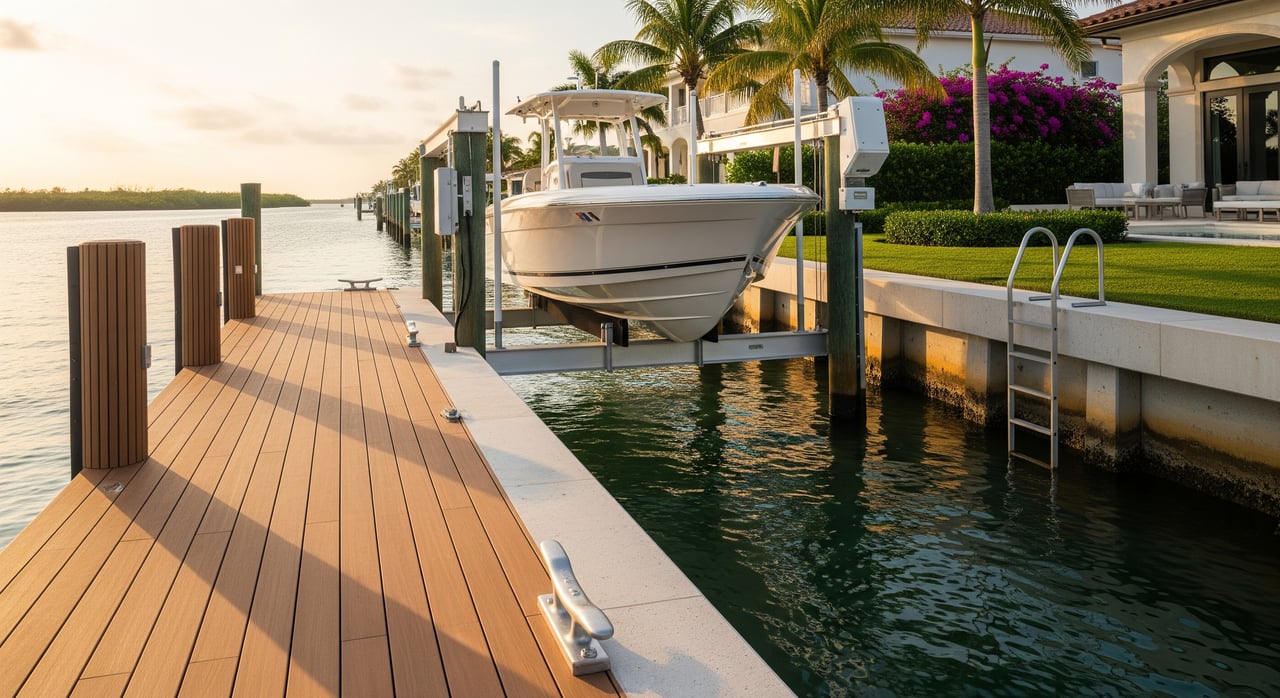
Love the idea of stepping from your backyard to your boat and reaching the Atlantic in minutes? In Ocean Ridge, the right dock, lift, and seawall can make that lifestyle effortless, while the wrong setup creates headaches and hidden costs. If you are exploring waterfront homes here, you want clear answers on depth, access, and maintenance. This guide breaks down Ocean Ridge dock styles, lift options, seawalls, and inlet access, plus a simple checklist to use before you buy. Let’s dive in.
Ocean Ridge waterway basics
ICW and canal realities
Most Ocean Ridge homes front the Intracoastal Waterway or the canals that feed into it. Depth can change block by block. Many canals were dredged years ago, and some areas get shallow at low tide. Depth at your private dock is a practical detail that affects daily use, especially if you run a larger hull or deeper draft.
Your dock’s approach matters as much as the slip itself. You need enough turning room to back out or line up a lift without touching the bottom or crowding a neighbor’s dock.
Inlet choices and timing
Ocean access from Ocean Ridge is typically through nearby inlets. Local boaters use Lake Worth Inlet to the north and Boynton Inlet to the south. Farther south, Boca Raton and Hillsboro inlets serve certain routes. Inlets focus tidal flow, so currents can be strong. Many boaters time passages near slack tide for a safer and easier run.
Tides and sea level context
South Florida has a small tidal range, but tides still influence depth at private docks and the force you feel in inlets. For planning, use official sources like NOAA Tides & Currents to understand local patterns. Since sea level rise is part of regional planning, long-term design decisions for docks and seawalls should factor future conditions. The Southeast Florida Regional Climate Change Compact shares regional guidance that many communities consider during reviews.
Dock types in Ocean Ridge
Fixed docks: when they fit
Fixed pile-supported docks are common and provide a stable walking surface. When built well, they are durable and keep gear above splash zones. They are more exposed to waves and surge, so piles and connections must be strong. Plan for periodic inspections and potential pile maintenance as the structure ages.
Floating docks: pros and cons
Floating docks rise and fall with the tide, which keeps boarding heights consistent. They can be easier to retrofit in certain locations. Expect more motion during boat wakes. Pontoons and fittings need monitoring for leaks, fastener wear, and marine growth.
Layouts and small-craft options
Finger piers and T-heads create more usable space without pushing into the channel. Smaller setups can include davits or small hoists for dinghies and personal watercraft. The goal is a layout that suits your vessel mix without narrowing navigation for you or your neighbors.
Materials that resist salt
Decking ranges from tropical hardwoods and pressure-treated lumber to composite and PVC options. Each has tradeoffs for grip, heat, and maintenance. Hardware and fasteners should be stainless or well protected, and electrical components must be marine grade and weatherproof. Salt and sun drive corrosion, so plan for inspections and timely replacements.
Boat lifts that match your vessel
Common lift systems
- Cradle lifts with bunks or rollers raise the hull fully out of the water and are the most common residential option.
- Hydraulic or electric hoist lifts handle larger boats, with attention to cable, motor, and power supply condition.
- Floating lifts can work for lighter craft and offer simpler installs in some slips.
- Vertical platform lifts are less common at homes but can help in tight spaces.
Sizing and electrical safety
Match lift capacity to the true weight of your boat, including fuel, water, and gear. Ask about age, brand, maintenance records, and controls. Electrical supply should be properly protected with GFCI and done by a licensed professional. For operating basics and safety rules on Florida waterways, the Florida Fish and Wildlife Conservation Commission is a good resource.
Daily use and maintenance
Plan to inspect cables, motors, and connections at least once a year and after storms. Replace worn cables and corroded parts before failure. Use sacrificial anodes where appropriate and keep moving parts clean and lubricated. A lift reduces growth on your hull, but it does not remove the need for adequate approach depth at low tide.
Seawalls that protect your property
Common wall types
You will see concrete seawalls, steel or vinyl sheet pile systems, and older timber walls. Concrete is common for durability and a clean look. Vinyl or steel panels are often used when panel replacement is feasible. Timber can be present on older properties and needs closer attention.
Red flags to watch
Watch for leaning or bulging wall faces, cracks, exposed or corroded tiebacks, settlement behind the wall, and erosion at the toe. Seepage through or behind the wall can hint at deeper issues. Seawall condition affects landscaping, yard stability, and even nearby docks.
Permits and professionals
Repairs or replacement usually require permits. Expect local reviews and sometimes state or federal approvals if work touches submerged lands or navigation. Start with the Town and county, then confirm state and federal needs:
- Town of Ocean Ridge building and code information: Town of Ocean Ridge
- Palm Beach County coastal resources and permitting: Palm Beach County Environmental Resources Management
- State permits and coordination: Florida Department of Environmental Protection
- Federal regulatory program: U.S. Army Corps of Engineers Regulatory Program
For flood risk and insurance planning, check FEMA flood maps. Many buyers also factor long-range design choices in light of regional sea level guidance.
Navigation, bridges, and etiquette
Channel depths and shoaling
Channel depths can change due to shoaling and sandbars. Even when a channel is maintained, local conditions vary. Check recent charts and local reports before taking a new route, and confirm your draft against depth at mean low tide near your dock.
Bridges and speed zones
Bridge clearances along the immediate ICW stretches near Ocean Ridge are generally favorable, but always verify charted heights for taller masts. Expect speed and no-wake zones near docks and marinas. Wildlife protection rules can apply in certain reaches.
Weather calls and safety
Ocean swell and wind can turn a simple inlet crossing into a bumpy ride. Timing departures near slack tide reduces current and makes maneuvering easier. Carry proper safety gear, monitor VHF where appropriate, and follow FWC boating safety guidance.
Pre-purchase dockage checklist
Use this quick list to evaluate a property before you commit:
- Verify permit history for the dock, lift, and seawall with the Town and county. Request copies of original permits and repair approvals.
- Order professional inspections. A marine contractor can assess dock framing, pilings, and lift condition. Engage a structural or geotechnical engineer for older or questionable seawalls.
- Confirm depth at mean low tide at the dock and along your approach. Get soundings if you plan to run a deeper draft.
- Review lift capacity, age, brand, motor voltage, and service history. Confirm remote controls, limit switches, and safety features.
- Inspect utilities. Look for GFCI on shore power, weatherproof enclosures, and visible corrosion on connections.
- Ask insurance carriers about coverage for docks and seawalls. Flood insurance requirements are separate from homeowners policies.
- Review association or shared dock rules if access is shared or part of a community easement.
- Check hurricane plans. Know how the lift and boats are secured or removed ahead of storms.
What this means for value and lifestyle
A well-designed dock and lift turn boating into an easy, everyday habit. The right seawall protects your yard, landscaping, and hardscape. These features impact maintenance costs, insurability, and how often you actually use your boat.
When you compare homes, think about your typical run: which inlet you will use, whether you can approach the lift at low tide, and where you can turn without risk. If a property needs upgrades, factor timing and permits with the Town, county, and state, and confirm whether federal approvals are required. A clear plan for the dock, lift, and seawall will help you bid with confidence.
If you want help evaluating a specific property or curating options that fit your boat and routine, connect with Lemore Zausner for boutique guidance and local introductions. Book an Appointment to start your tailored waterfront search.
FAQs
Do I need permits to modify a dock or seawall in Ocean Ridge?
- Yes. Most structural work requires municipal and county permits and may also need approvals from state and federal agencies if submerged lands or navigation could be affected.
Will a boat lift solve shallow water at my dock?
- A lift keeps your hull out of the water when stored, but you still need enough depth at low tide to approach and load the boat safely onto the lift.
How often should docks and lifts be serviced in Palm Beach County?
- Plan for annual inspections and post-storm checks. Cables, motors, coatings, and hardware often run on multi-year replacement cycles based on materials and salt exposure.
Are private seawalls and docks covered by homeowners insurance?
- Coverage varies by policy. Many carriers treat docks and seawalls differently, and flood insurance requirements are separate from homeowners coverage.
Are there size limits for boats at private docks in Ocean Ridge?
- Limits depend on water depth, turning room, dock length, permit conditions, and any local ordinances or association rules that apply to the property.