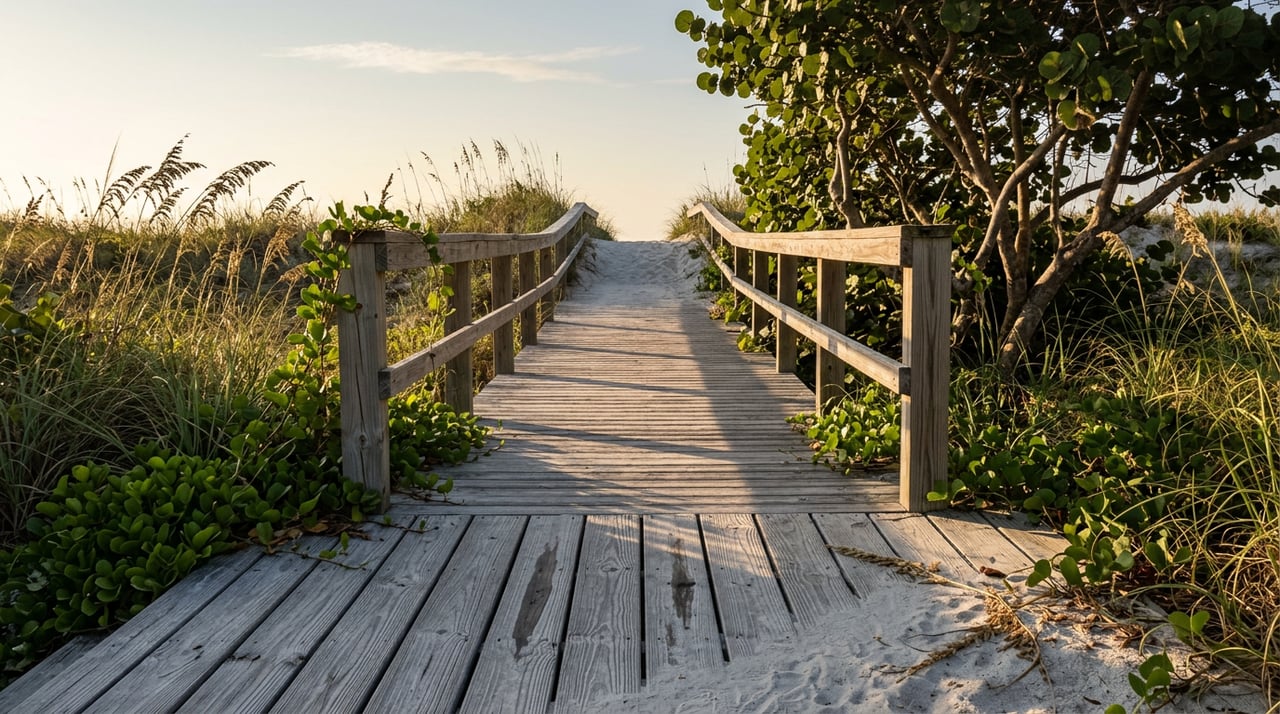
Walk the sandy path through the sea grape canopy at Hammock Park on a quiet weekday morning and the first thing you notice isn't the ocean. It's the width of what's in front of it. The dry sand shelf that used to disappear at high tide into a narrow strip barely wide enough for a beach chair now stretches out enough that you can set up camp well clear of the waterline and still have room to walk a dog in a straight line before the surf gets involved. If you haven't been back since spring, the geography changed while you weren't looking.
That's not an accident of a good tide cycle. It's the result of a federal project that spent real money reshaping a specific mile of this coastline, and understanding what actually happened matters if you're deciding which of Ocean Ridge's three beach access points to use for the rest of the summer.
What the Corps Actually Moved
The Ocean Ridge Shore Protection Project runs on a five-year cycle, and this spring was its turn. The Army Corps of Engineers spent $9.4 million spreading roughly 500,000 cubic yards of sand across 1.1 miles of shoreline, from south of Ocean Avenue up through Ocean Inlet Park, with Hammock Park benefiting from the same dredging even though it sits just north of the main work zone. Crews started slightly behind schedule in late winter because erosion had already outpaced the original timeline, and the numbers weren't final until late April.
One detail worth knowing if you bring kids or walk barefoot: every cubic yard placed on the beach was screened for shell and rock before it went down, specifically to protect nesting sea turtles. The practical effect is that this stretch of new sand feels noticeably cleaner underfoot than a typical Palm Beach County beach does the week after a storm dumps a fresh layer of shell fragments. That's not a cosmetic detail. It's the reason your feet aren't getting cut walking from the parking lot to the water this year.
Three Beaches, One Mile
Before this spring, the three access points within a mile of each other functioned as near-substitutes. You picked one based on parking or mood, not because the beach itself was meaningfully different from the next one over. That's no longer true.
Ocean Ridge Hammock Park (6620 N Ocean Blvd) is still the smallest and quietest of the three. It's an 8.54-acre parcel buffered from A1A by a dense stand of sea grape, gumbo limbo, paradise trees and sabal palm, with no restrooms, no drinking water, and no lifeguard on duty. What it has now is a wider stretch of rebuilt beach and dune than it's had in years, feeding directly off the same fill that widened the shoreline to its south.
Boynton Beach Oceanfront Park, just south of Hammock Park, is the amenity-rich option: showers, restrooms, and the paid parking most people actually use. This is where the bulk of the 500,000 cubic yards landed, which means it's currently the widest and most dramatically changed of the three.
Ocean Ridge Natural Area, reached off A1A via Corrine Street with no sign marking the turn, is the outlier. Its two-story boardwalk tower looks out over a mangrove-fringed stretch where you're more likely to spot an osprey, a little blue heron, or a passing manatee than to lay out a towel. The Palm Beach County parks page for Ocean Ridge Hammock lists it as a separate, connected access point worth the short walk south, and it's the one spot on this mile that the renourishment project didn't reshape, because it was never designed as a swimming beach in the first place.
The choice used to be about convenience. Now it's about which beach you actually want: wide and social, small and private, or quiet and full of birds.
The Parking Math Regulars Do In Their Heads
If you're new to this stretch, the parking logistics catch people off guard, especially at Hammock Park, where the lot is small and the sea grape canopy overhead tends to kill your cell signal right when you need it to set up a ParkMobile session. Do that part before you leave the house.
At Oceanfront Park, daily paid parking runs through ParkMobile at $2.50 an hour. Anyone using the beach more than a couple dozen times a year should do the arithmetic locals already have in their heads: the $65 annual permit, sold at Boynton Beach City Hall on East Ocean Avenue, breaks even at roughly 26 hours of parking across the whole year. For a household that treats the beach as a Saturday morning habit rather than an occasional outing, the annual permit pays for itself by early summer.
What the Dune Still Has to Prove
The sand is down. What isn't settled yet is whether it holds. The Corps rebuilt both the beach and the dune line as part of this project, and the real test isn't a calm August afternoon, it's the first named storm system that pushes real wave energy against that rebuilt profile. How the dune performs will help show whether the project reaches its projected lifespan.
There's a second number worth watching that most beachgoers never think about: nesting counts. Palm Beach County consistently ranks among the highest-density loggerhead nesting shorelines in the world, and this stretch feeds into county-wide totals that get reported each fall. A season where turtles nest successfully on the new sand is a good sign for the next five-year cycle. A season where they don't tells county and federal budget planners something different, and it's the kind of quiet local data point that ends up shaping whether the next renourishment happens on schedule or gets delayed.
None of this is dramatic in the way a grand opening or a festival is dramatic. It's slower and more useful than that. If you live in Ocean Ridge, the beach at the end of your street just went through the biggest physical change it will see for half a decade, and the difference is visible the moment you clear the hammock and look at how much sand is actually between you and the water.
Living With the Change
This is the kind of shift that doesn't show up on a real estate listing or in a headline, but it's exactly the texture that makes a small coastal town feel different from the beach towns around it. Ocean Ridge has always been the version of this coastline without the boardwalk crowds or the high-rise skyline, and a wider, cleaner, quieter beach only reinforces why people who already live here rarely want to be anywhere else on a Saturday morning. If you're curious what else defines the day-to-day rhythm of this stretch of coast, we've written before about what daily life actually feels like in Ocean Ridge, and it's worth a read alongside this one.
For a naturalist's eye on the hammock itself, including which birds tend to show up after a passing storm, Wild South Florida's overview of the park is worth bookmarking before your next walk through.
Whether you're watching the dune hold through the next tropical system or just enjoying the extra ten feet of sand between your chair and the tide line, this is one of those small, specific changes that makes living on this stretch of coast feel like paying attention pays off.
If a wider beach and a quieter mile of coastline are part of what you're looking for in your next home, or if you're already here and simply curious what your property is worth in a market that keeps rewarding towns like this one, Lemore Zausner would love to help. Book an appointment and let's talk about what living on this coast could look like for you.