Say you close on a lot in Gulf Stream, hire an architect who has done a dozen jobs on the barrier island, and spend six months getting your design through the town's design review. You clear it. You assume the hard part is over. It isn't. Your design has been approved by one town. Your permit still has to be issued by another, according to Gulf Stream's permit page.
That split is the part of buying and building in Gulf Stream that surprises even experienced renovators, and it explains more about how long a project actually takes here than any line in the design manual does.
What the Architectural Review and Planning Board Actually Controls
Gulf Stream's Architectural Review and Planning Board, five members and two alternates appointed by the Town Commission to staggered three year terms, meets on the fourth Thursday of every month at 8:30 a.m. at Town Hall on Sea Road. Its job is narrow and specific: massing, roof form, exterior materials, window proportions, and color, governed by a Design Manual that goes well beyond a typical municipal zoning code.
A Level 1 review, covering accessory structures and minor work under 300 square feet, gets decided by town staff without ever reaching the board. A project that uses a style the town discourages goes to Level 2 under the town's code, where the ARPB itself becomes the final decision maker. The threshold that trips up the most buyers is the style clause: propose something the manual doesn't like, and a project that might otherwise have stayed at staff level gets pulled into a full board hearing.
The Design Manual Has Its Own Vocabulary of Style
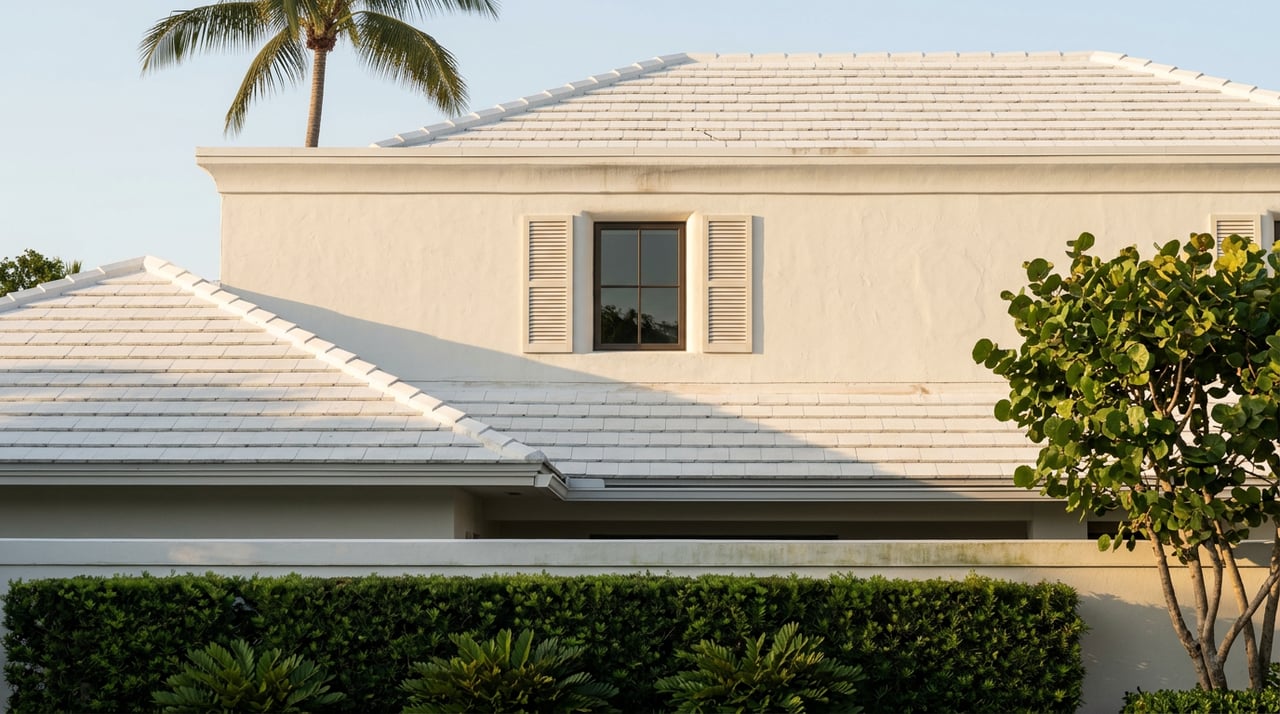
The Gulf Stream Design Manual doesn't leave style open to interpretation. It names the traditions it considers appropriate to the town, Gulf Stream Bermuda and Spanish Mediterranean Revival among them, down to which roof tile belongs with which: white cement tile paired with Bermuda, barrel tile with color blends for Spanish Mediterranean Revival. It also names what it doesn't want. English Tudor and Victorian are called out directly as styles uncharacteristic to South Florida, and flat roofs are capped at 25 percent of total roof area unless they're being used to reduce massing.
None of this is a suggestion. It's the standard the ARPB measures your submission against, and it's why an architect who has worked in Gulf Stream before is worth more than one who hasn't. The manual rewards precedent. A design that echoes what already exists on the street clears faster than one that doesn't.
A Different Town Signs Off on the Permit
Here's the part that catches people off guard. ARPB approval and building permit issuance are handled by two separate governments.
Gulf Stream has no building department of its own. For nearly thirteen years leading up to 2022, Delray Beach processed the town's permits. That arrangement ended abruptly that year, when Delray Beach halted engineering, floodplain, and landscaping review for Gulf Stream after discovering its own building department had been doing that work without the proper credentials. The Coastal Star reported that Gulf Stream spent months in limbo, as town manager Greg Dunham described it at the time, before the town struck a new interlocal agreement with the Town of Highland Beach in the summer of 2022.
Four years later, that arrangement is still what's in place. Every Gulf Stream permit now runs through Highland Beach's building department and its fully digital portal. No paper applications are accepted.
For a buyer, the practical effect is that the ARPB's yes is necessary but not sufficient. You still have to route the approved design through a neighboring town's permit system before a contractor can pour a footing.
Where the Clock Actually Runs Out
The ordinance builds in real deadlines, and missing them costs real time. A Level 1 approval stays valid for 60 days, and if a building permit application isn't submitted to Highland Beach within that window, the architectural approval expires automatically. You can ask the ARPB for a one year extension if you have a good reason, but that's a request, not a right.
The bigger risk sits on the other side of a denial. Under the town's code, an application that's withdrawn with prejudice or denied outright can't be resubmitted for a full calendar year. For someone who assumed a rejected design just means going back to the drawing board next month, that's a materially different timeline than they budgeted for, especially layered on top of the fact that local builders working in Gulf Stream commonly quote custom construction at $700 to $1,200 or more per square foot, with 15 to 24 month builds even when everything goes smoothly.
What a Denial in Practice Looks Like
The ARPB's standards aren't abstract, and the town's history of hearings shows it. The Coastal Star reported that Town Commissioners sent a proposed two story home on a cove off the Intracoastal back to the drawing board in one case involving a property on Banyan Road, in the town's core district, telling the board to revisit the structure's overall massing after the mayor at the time, Scott Morgan, objected that the design took up too much of the lot. Commissioners also pushed back on a requested setback exception, the layout of the master suite facing the cove, the landscaping plan, and even the color of the window frames. The architect on record maintained the house was already within the town's size limits. The commission's objections were about feel, not just the numbers.
That's the texture of Gulf Stream review that a zoning table can't capture. Compliance with the letter of the code doesn't guarantee a smooth hearing. Massing, sightlines from the water, and a subjective sense of whether a house fits its street all factor into the outcome.
Building the Right Timeline Before You Buy
If you're evaluating a Gulf Stream property with renovation or rebuild plans in mind, the sequencing matters as much as the design itself. A pre-application meeting with Town Clerk Renee Basel is required before any exterior remodeling, major landscaping, or significant property improvement, and it's the fastest way to learn which review level your project will trigger before you've spent months on drawings. Budgeting for the Highland Beach permit stage as a separate phase, with its own digital submission requirements and its own timeline, keeps the ARPB's approval from feeling like false progress. And treating a denial as a real possibility, given the one year resubmission lockout, is worth factoring into any purchase where a renovation is part of the plan rather than a maybe.
None of this changes what makes Gulf Stream worth buying into. The same review process that adds months to a renovation timeline is also what has kept the town's oceanfront streets looking largely as they did decades ago. But if you're weighing Gulf Stream against another stretch of this coast, the honest comparison includes this process, not just the waterfront and inland price gap buyers usually ask about first.
A Few Questions Worth Asking Directly
What happens if the ARPB asks for changes instead of denying a project outright? That's common, as the Banyan Road case shows.
If you're looking at a property in Gulf Stream and want a clear read on what a renovation or rebuild would actually involve, from the design manual to the permit sequencing to realistic timing, Lemore Zausner can walk through it with you before you write an offer. Book an appointment to talk through the specifics of your property and your plans.
This article is general information, not legal, tax or financial advice. Consult a qualified professional about your situation.