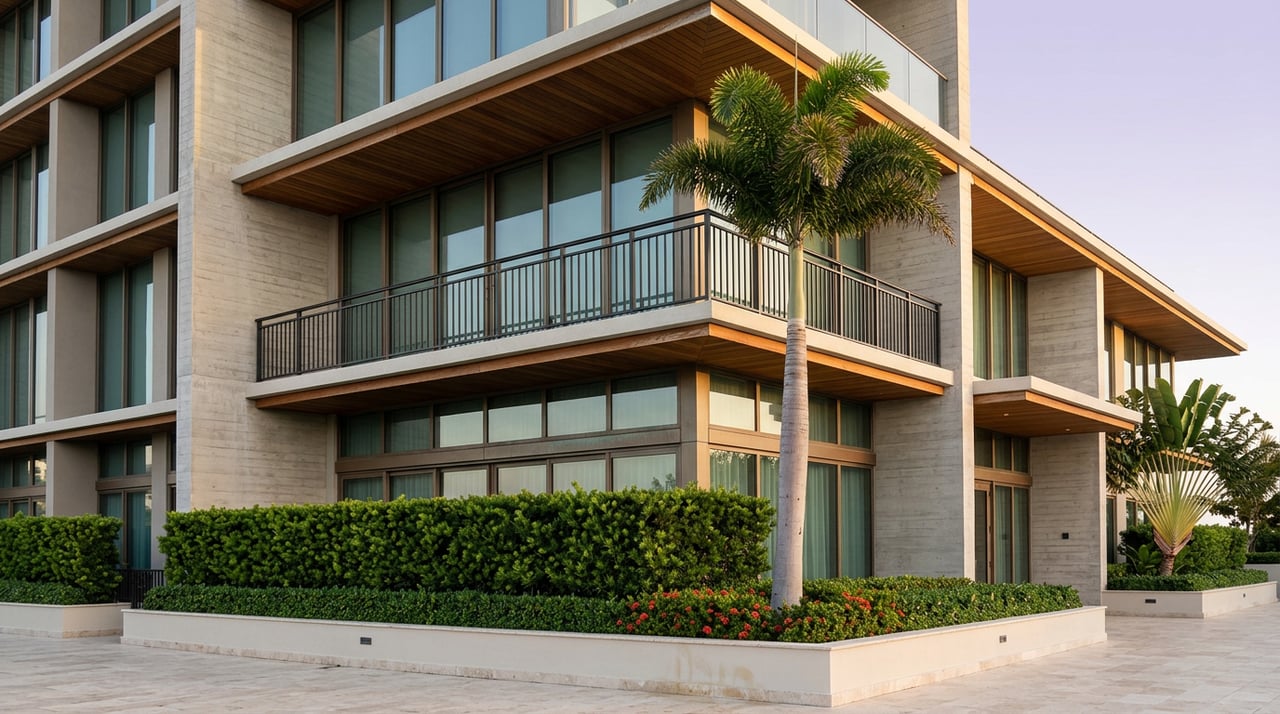
Picture two oceanfront units in Highland Beach, listed within a few weeks of each other. Same price. Same square footage. Same renovated kitchen, same wall of glass facing the water, same walk to the sand. On paper, a buyer could flip a coin.
They shouldn't. The number that actually separates these two units has nothing to do with finishes. It's the financial condition of the building itself, which varies across Highland Beach buildings.
Condo Building Finances in Highland Beach Listings
A reading of active condo listings across Palm Beach, Broward, Miami-Dade, Martin and St. Lucie counties, snapshotted on September 14, 2026, found that Highland Beach leads every city on the list. Of the town's 103 active condo listings, 16.5 percent disclosed an unresolved special assessment, structural integrity reserve study, milestone inspection, or reserve-funding issue in the listing remarks. Broward County as a whole came in at 6.2 percent. Palm Beach County, where Highland Beach sits, averaged just 3.0 percent.
The listing data show a difference in disclosure rates, but they do not explain what is driving it.
Why the Math Runs Different Here
Highland Beach is a small, condo-heavy market built around a handful of well-known addresses: Toscana's oceanfront towers, the townhomes at 3621 South Ocean, the Bel Lido waterfront enclave, Clarendon, Le Sanctuaire, Boca Highland and Braemar Isle. Many of these buildings went up in an era when Florida law let association boards vote, year after year, to waive reserve contributions and keep monthly dues low. It was a popular vote. Nobody likes a bigger maintenance bill, and for decades there was no requirement forcing the issue.
That era ended with Senate Bill 4-D and the follow-up legislation in House Bill 913, passed in response to the 2021 Champlain Towers South collapse in Surfside. Boards can no longer waive reserves for the structural items that matter most: roof, load-bearing walls, waterproofing, electrical, plumbing, fire protection, and any other component with a repair cost over the current statutory threshold. According to Governing Docs, full funding was required to begin by January 1, 2026.
Across the same five-county dataset, buildings finished before 1980 carry an 8.0 percent unresolved-disclosure rate. Buildings from 2000 or later sit at 1.1 percent. That age gradient is the mechanism behind Highland Beach's number. The town's oceanfront inventory skews older and smaller than Boca Raton's or Delray Beach's, which means more of its buildings are the ones now catching up on decades of deferred reserve funding all at once.
The dues on an older oceanfront building were never wrong. They were incomplete. Reserves a board voted to skip for twenty years don't disappear. They come due, usually all at once, right around the time a new owner is signing a contract.
What Actually Changed in 2026
Two deadlines are doing the work here. BuildingMavens reports that the deadline to complete a Structural Integrity Reserve Study was December 31, 2025.
Financing tightened at almost the same moment. For loan applications dated on or after August 3, 2026, ARETSI FL reports that Fannie Mae and Freddie Mac generally require a Full Review of a condo project rather than the lighter review many buildings previously qualified for. Under that review, insufficient master insurance and failure to meet inspection requirements are now the two most common reasons a building lands on a restricted list. That change landed just six weeks before the September snapshot that put Highland Beach at the top of the disclosure table, which is not a coincidence so much as two different pressures converging on the same buildings at once.
What This Costs, in Numbers a Buyer Can Actually Use
Across the five-county dataset, condos whose listing remarks mention an unresolved assessment or inspection carry a median asking price of $299,250, against $329,900 for listings that don't, a roughly 9 percent gap. That figure spans everything from entry-level units to seven-figure oceanfront stock, so it isn't a dollar amount to import directly into a Highland Beach negotiation. But the direction holds. The figures show lower median asking prices for flagged listings, but they do not establish why.
A second number worth sitting with: flagged listings across the five counties spent a median of 91 days on market, against 94 days for listings without a disclosure, and 45.2 percent of them had already cut their asking price, compared with 41.5 percent of the rest. The median time on market was slightly shorter for flagged listings, while a higher share had cut their asking price. The figures do not establish how sellers set their initial asking prices.
One more nuance worth knowing before you read a listing description too literally: of listings mentioning an assessment, inspection, or reserve-funding matter across the five-county area, nearly 46 percent stated that the assessment was already paid, the inspection had already passed, or the reserves were already funded. A mention of SIRS or milestone inspection in a listing is not automatically bad news. Sometimes it's the opposite, proof that the work is behind the seller rather than in front of the buyer.
The Documents That Actually Answer the Question
Price per square foot and photos tell you almost nothing about which side of this line a specific building sits on. Four documents do.
- The Structural Integrity Reserve Study. This tells you whether the association's reserves are funded to the level its own engineering study says they need to be, not just what the board happens to have budgeted.
- The milestone inspection report, including a Phase 2 if one was triggered.
- The last twelve months of board meeting minutes. Assessments can show up in these discussions before they show up as a line item on a maintenance bill.
- The building's Fannie Mae condo project status.
Ask for all four before writing an offer, not after. Together, they can help buyers assess the association's reserves, inspection findings, and financing status.
Reading Two Listings Side by Side
Back to the two units from the opening. Same price, same square footage, same view. The question that actually separates them isn't finish level. It's whether one building has a fully funded SIRS and a clean milestone report while the other is still working through a Phase 2 finding with an assessment under discussion in board meetings. That's the comparison worth making before square footage ever enters the conversation.
A Few Questions Worth Asking Directly
Does an older Highland Beach building automatically mean a worse deal? No. Age raises the odds that reserve catch-up is happening, but plenty of established buildings funded their reserves proactively and have clean milestone reports. The SIRS and inspection report tell you which category a specific building falls into. The building's age alone doesn't.
How do I find a building's inspection status before I'm far enough along to request formal documents? Ask the listing agent directly, in your first inquiry, for the SIRS, the milestone inspection report, and any board minutes referencing pending assessments. Buyers who wait until contract to ask lose leverage they could have used earlier.
Does this number mean Highland Beach itself is a riskier place to buy? Not in the way it might sound. It reflects an oceanfront town with a smaller, older condo stock. The same reserve-and-inspection questions apply anywhere in the state. Highland Beach's inventory just makes the answer show up sooner.
If you're comparing units in Highland Beach right now, from Toscana to the smaller boutique buildings tucked along the barrier island, the reserve study and milestone report deserve the same attention as the floor plan. I walk buyers through exactly that comparison, building by building, before an offer goes in. You can review the neighborhood's current listings on the Highland Beach guide, or book an appointment with Lemore Zausner to go through a specific building's documents together.
This article is general information, not legal, tax or financial advice. Consult a qualified professional about your situation.